GUARDIANS will help small- and medium-sized farms bridge the current technological gap with bigger farms through the implementation of a set of digital innovative solutions.
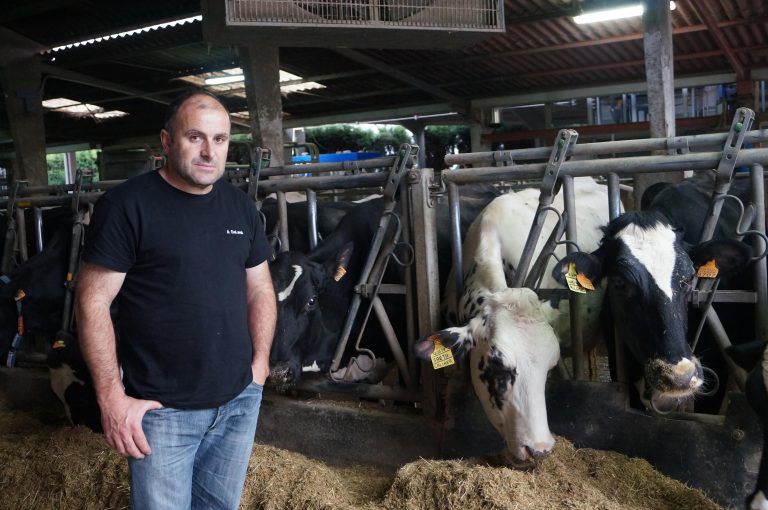
Today, we interview José Luis from Ganaderia Carbayeda (Asturias, northern Spain).
Hi José Luis!
Let’s start with the first question.
What kind of farm is Ganaderia Carbayeda? Can you tell us more about it?
“Ganaderia Carbayeda” is a family farm, and I am the owner.
We are located in the town of San Martin de Podes, near Gozon, in Asturias, northern Spain.
We cover a range of 80 hectares.
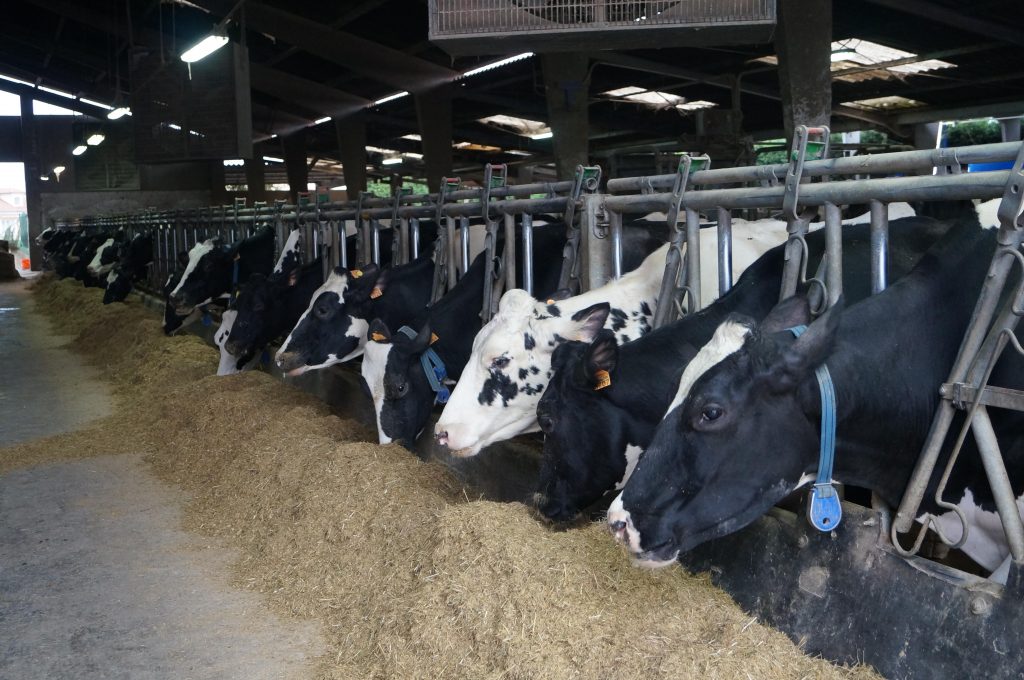
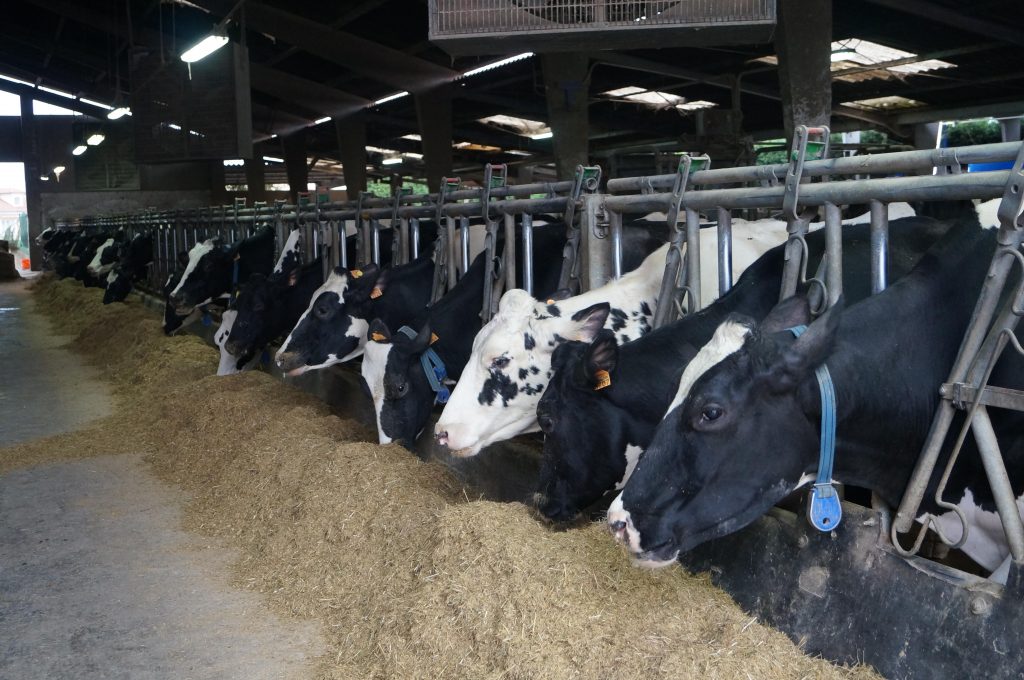
We have a total of 177 dairy animals of the Holstein Friesian breed. They have different ages. Most of them – 102 – are over 24 months old. Another 37 are between 12 and 24 months old. The remaining 38 are under 12 months.
Thanks to our animals, we produce a total of 1000 tonnes of milk per year.
I work with an employee, so there are just the two of us carrying out all the activities, with the invaluable help of my parents. I am the third generation managing this farm.
Tell us more about your core activities.
Our main activity is dairy production.
However, we also produce fodder that allows us to be self-sufficient. We only buy concentrate from an external supplier.
Occasionally, we sell calves and heifers to other farms too.
Regarding our territorial base, we occupy 30 hectares in rotation with ray-grass (in winter) and corn (in summer). The remaining 50 hectares are used for permanent pastures.
In addition, with my farm, we have been involved in genetic improvement programmes since 1987 through the cooperative ASCOL (“Asturiana de Control Lechero”) to which I belong.
Let’s shift to the GUARDIANS project. You are one of the farms involved in Pilot #5 where technology #7 Ecoward – a GHG Monitoring Platform for Stables – will be tested. What kind of challenges are you facing on your farm, and what do you hope to achieve with GUARDIANS?
Perhaps the main challenge the sector is facing, and therefore consumers too, is the lack of generational renewal.
That said, new regulations and environmental challenges will play a key role in livestock farming in the coming years.
From the GUARDIANS project, I hope to learn first-hand about all the advances for the reduction of the carbon footprint in milk production, my core activity. I am curious about understanding to what extent they can achieve the goal they are made for. Also, I would like to learn methodologies that can be applied in my daily work and assess the economic impact, per litre, on milk production.
In general, I would say that I hope GUARDIANS will help me set out the farm’s strategy for the coming years.
How do you feel about the use of technology for your daily work? Do you trust the technology you will test in the pilot? And what impact do you think it will have on your daily work?
Technology is an ally in our daily lives.
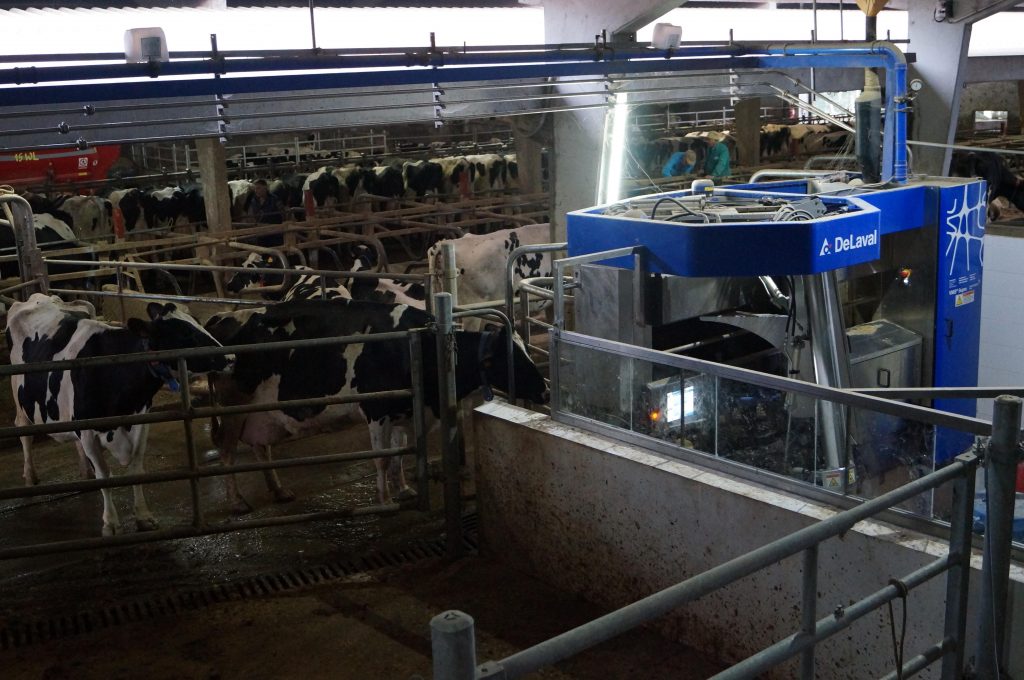
We feed our animals through a unifeed mixer wagon, and nine years ago I installed the robotic milking machine that is still working today. The lack of a specialised workforce and the ageing of farm owners make it practically essential to automate a large part of the farm tasks.
With the GUARDIANS project, a methane sensor for CH4 emissions will be installed on my farm, next to the robotic milking machine.
I believe that the fundamental starting point is to be aware of our footprint via real emissions data, and then to adjust our farming practices.
From this point, we can start and be self-sufficient in fodder, with well-formulated and adjusted rations for our animals, make optimised use of natural resources (sun and water), and be more efficient in the management of slurry. By so doing, we will show that we are not part of the problem, but instead, we are part of the solution.
For small- and medium-sized farms to be competitive in the global market, it is crucial to bridge the current technological gap with bigger farms. What are the current barriers in your opinion? What do you think is necessary to improve for more farmers to approach innovative and sustainable farming practices?
Each farm has different barriers due to the territory in which it is situated. Each territory has its own particularities and its own barriers.
And this applies not just on a worldwide scale, but also on a provincial scale; a farm just 100km from mine may have quite different barriers, as could a farm some 900km away in the south of Spain.
In my area, the biggest barriers are difficult land access, impossibility to expand buildings, and increasing tourist pressure. This means my farm can’t expand and we can’t compete with existing bigger farms.
What is more, the lack of network coverage in some areas of Asturias makes it difficult to implement innovative technologies. This is a crucial aspect of the uptake of technologies in this region, and it should be improved.
And, on the other hand, what would you suggest farmers do to approach, understand and potentially evaluate the use of new technologies in the agri-food sector?
I think farmers are quite proactive when it comes to trying new technologies, especially those who have generational renewal or with enough time ahead of them in their activity to use and benefit from them.
I would say that the best way to approach new technologies is to see models tested in real life conditions. And if technologies can be transferred to farms of all types and sizes, it would be even better.
The success of the implementation of robotic milking machines in our territory is based precisely on this.
Thank you for this inspiring chat, José Luis!
Stay tuned for the next Farm Stories interview.