
GUARDIANS will help small- and medium-sized farms bridge the current technological gap with bigger farms through the implementation of a set of digital innovative solutions.
Today, we interview Maria from Sjöfallet Honung & Musteri (Sweden), who leads a very fascinating activity: beekeeping.
Hi Maria!
Let’s start with the first question.
What kind of farm is Sjöfallet Honung & Musteri? Tell us more about it and your core activities.
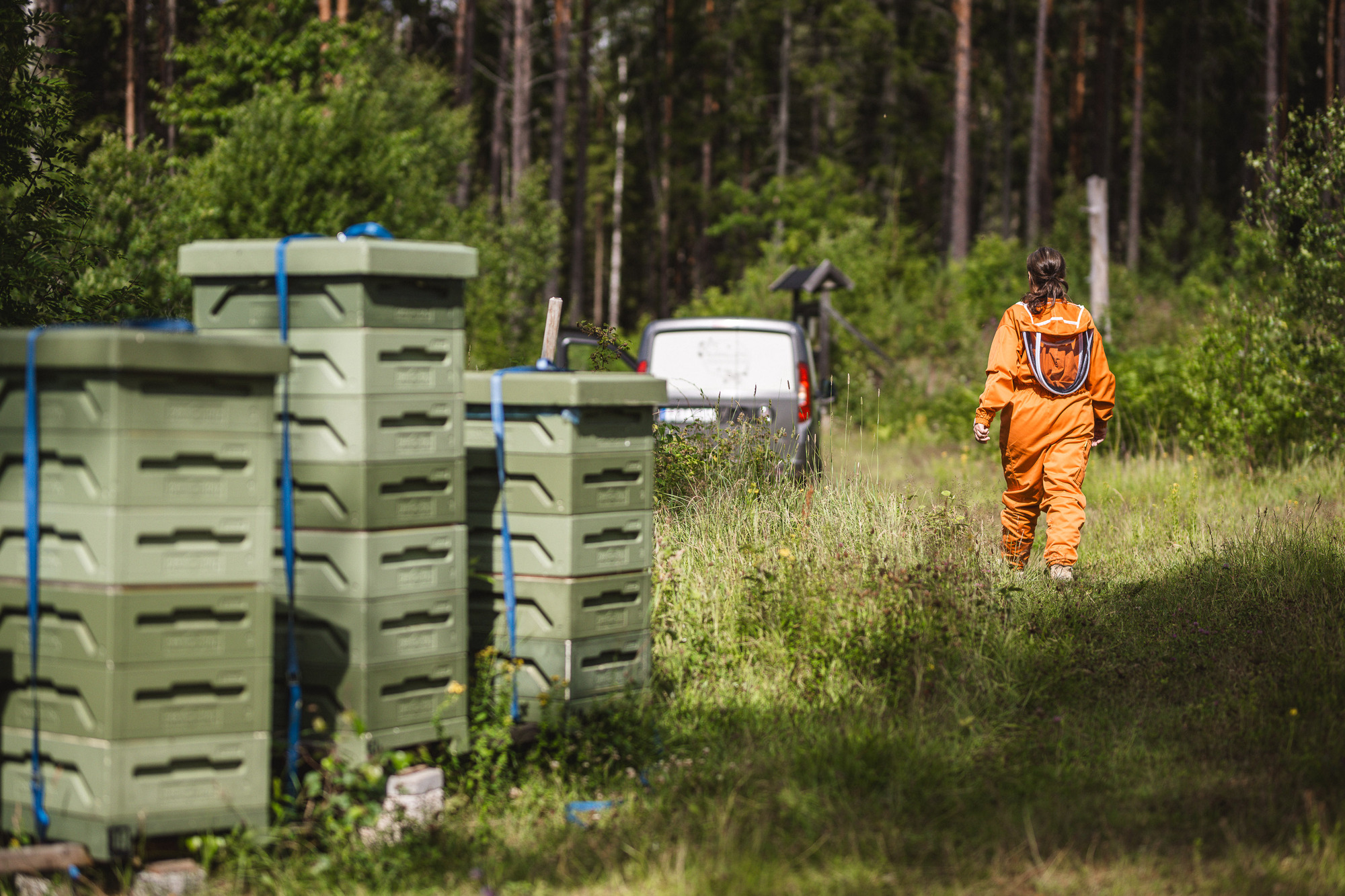
The farm is located about 200 km south of Stockholm, surrounded by forests and ecological farmland. Its name, Honung & Musteri, means “Honey and Apple Juice” and reflects the products I focus on.
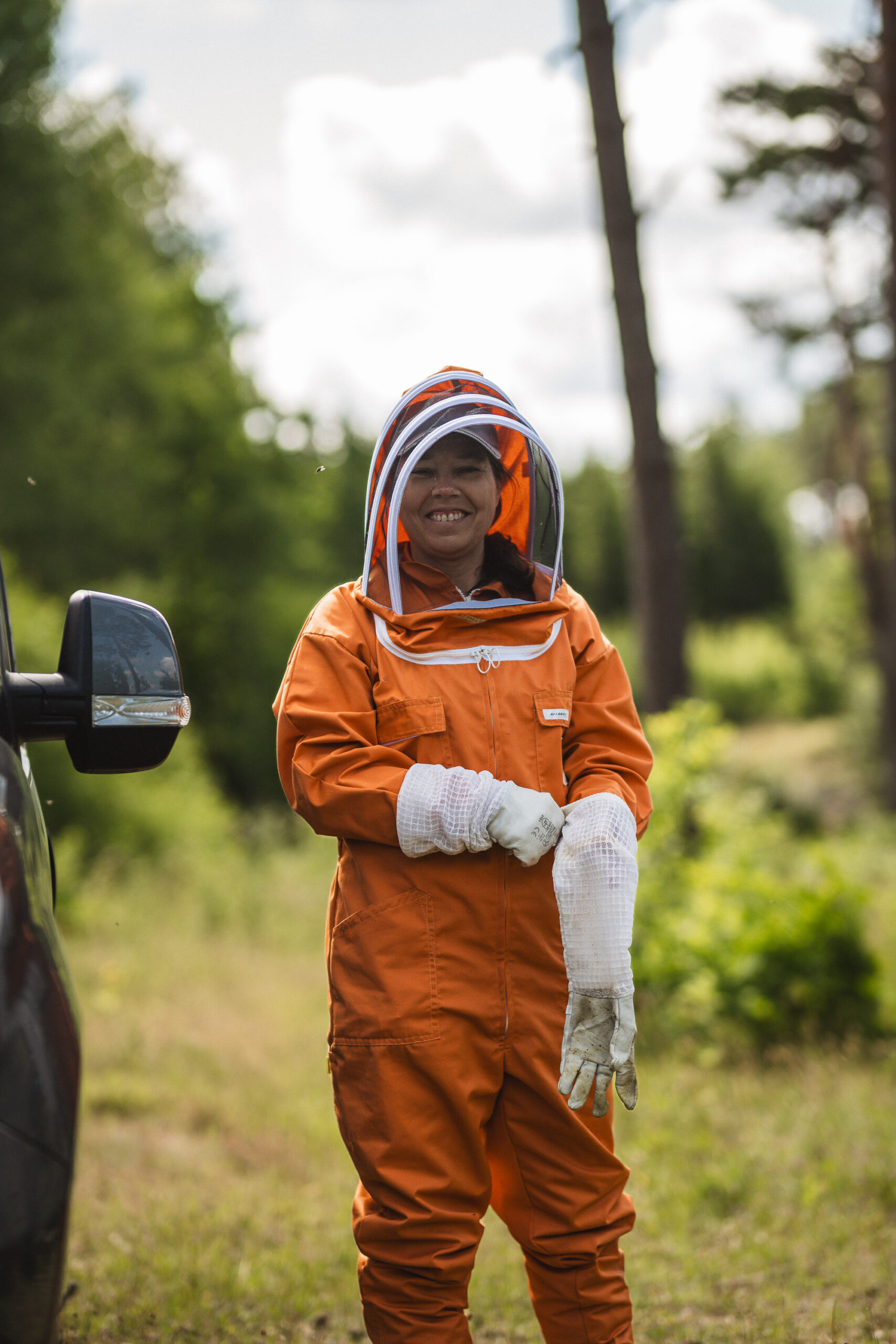
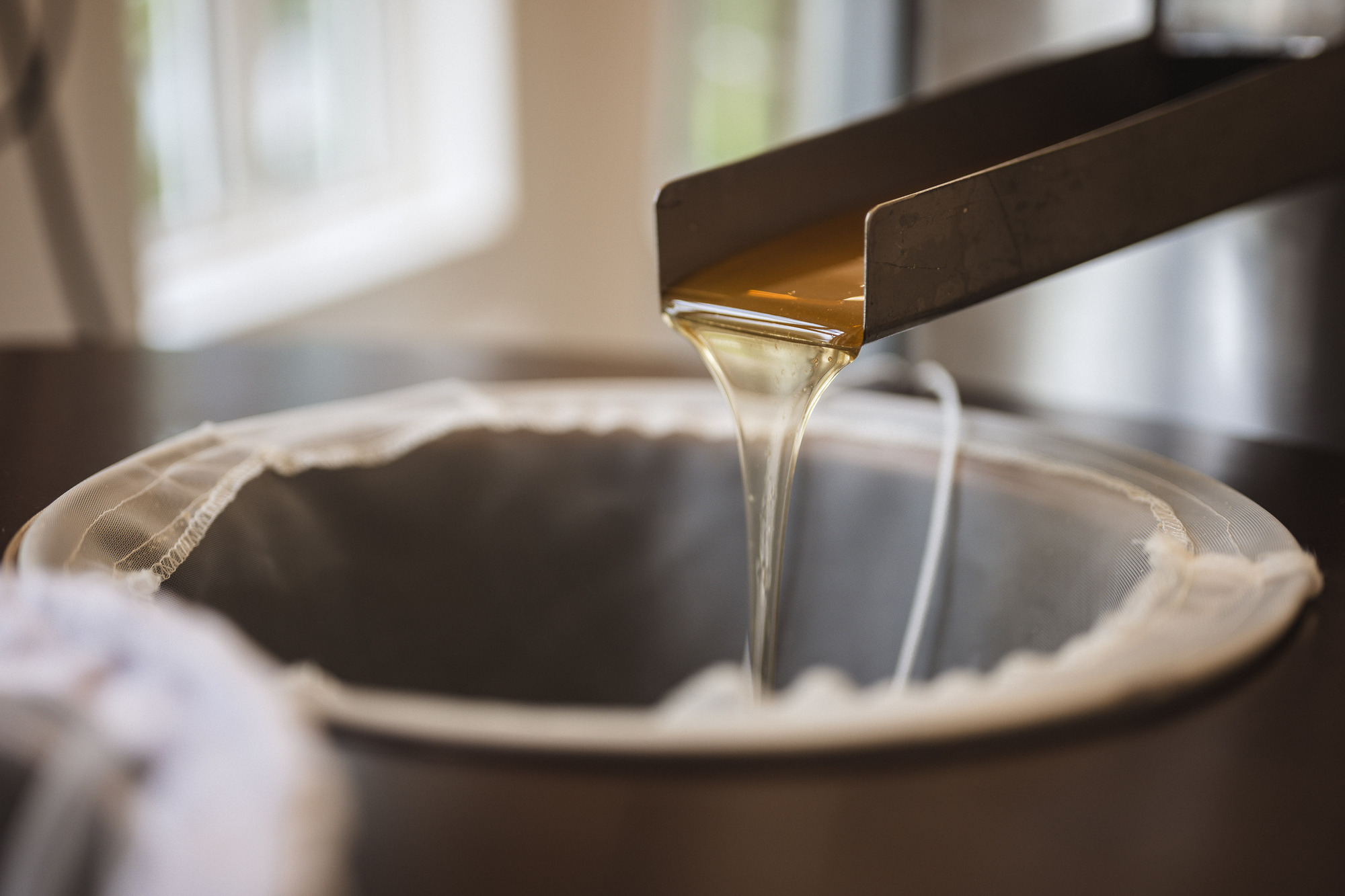
I operate a small but dedicated beekeeping business with 60 beehives, producing honey, bee pollen, and beeswax. While 60 hives may not be a large number, it allows me to offer high-quality and directly sold honey to my customers, which allows me to get by in the global market.
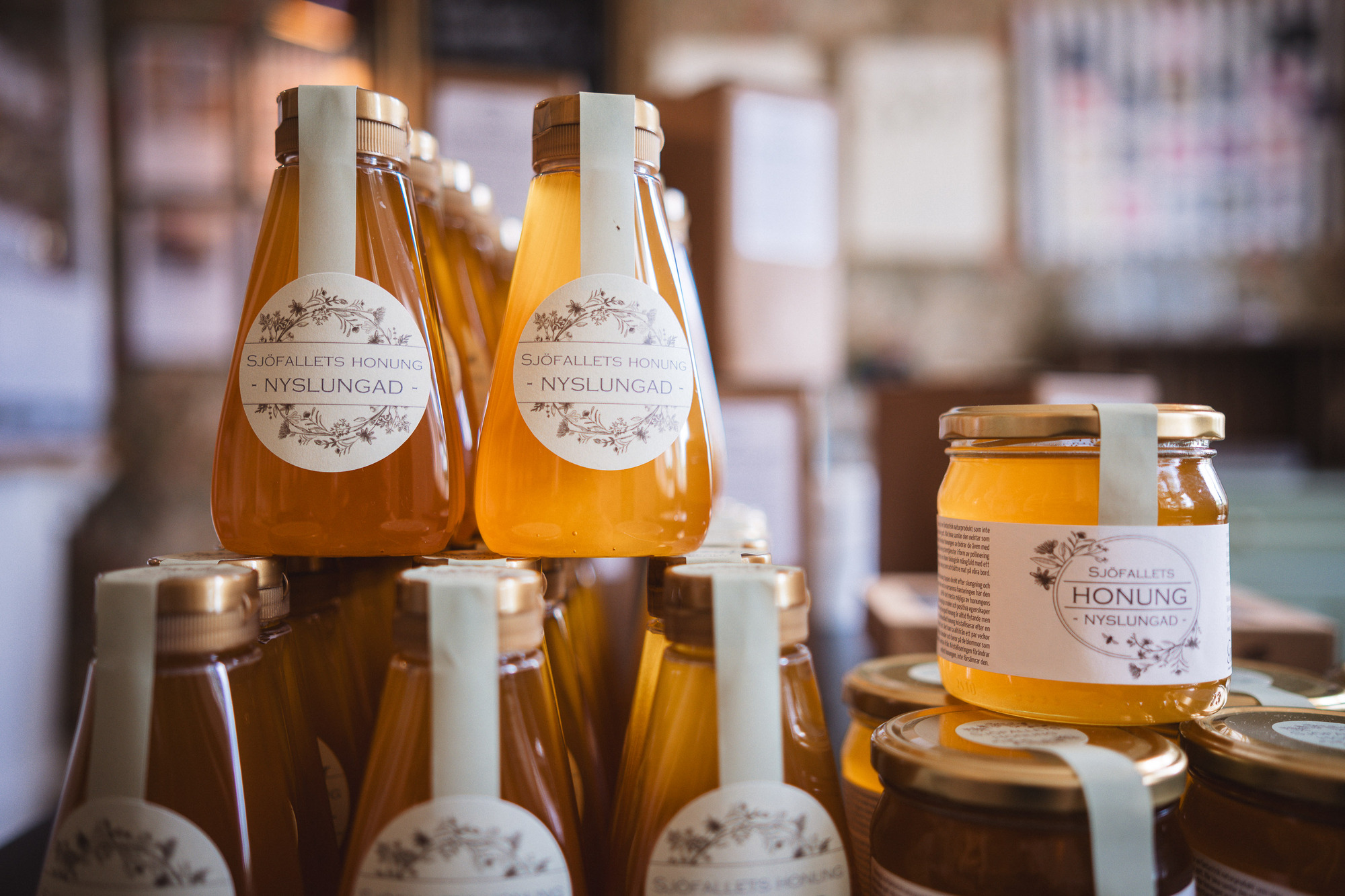
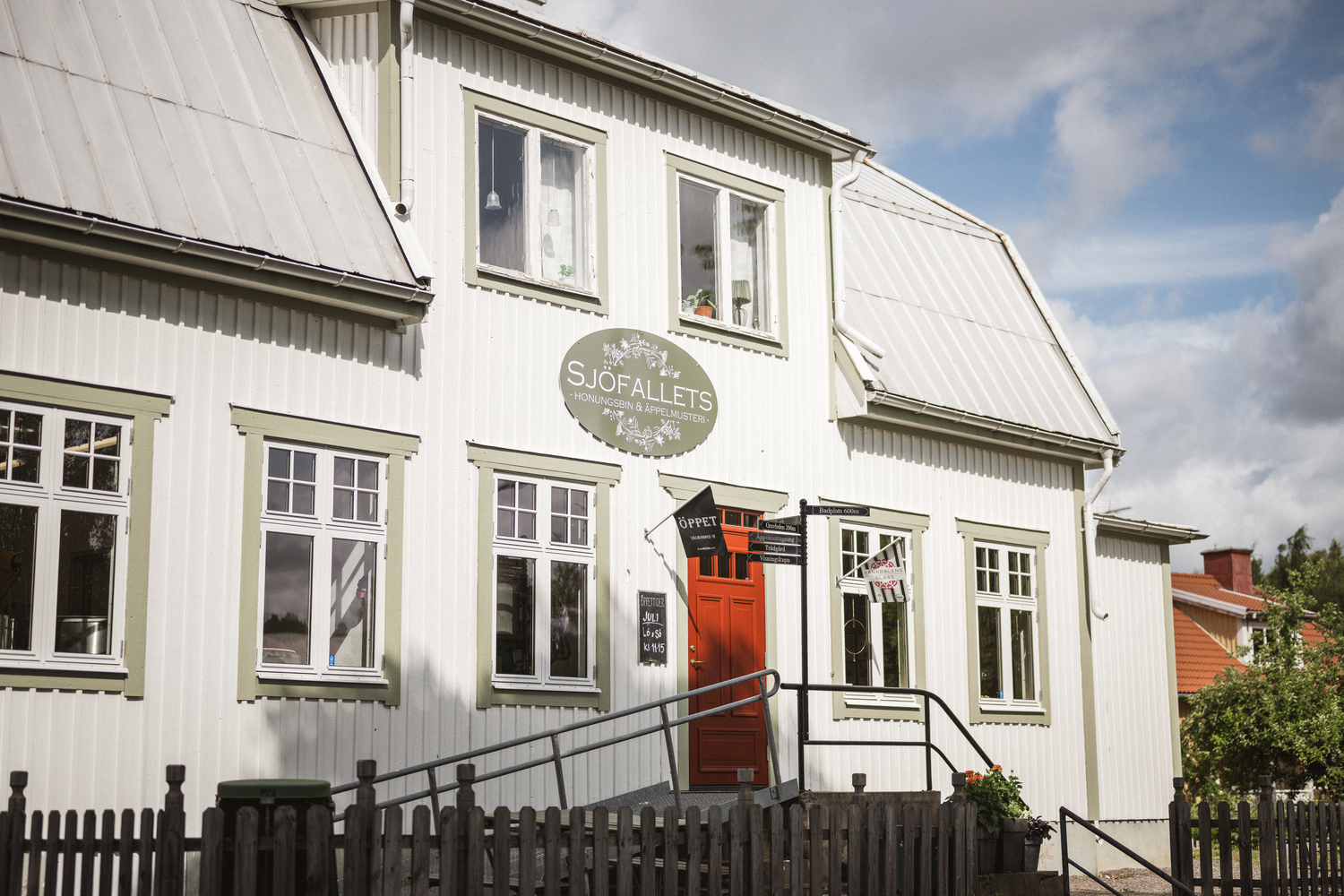
As I said, I also produce bee pollen and beeswax, which I use to make small items to sell like candles. I own a small honey shop which is located in a quiet village. It was once an old grocery store, and it now serves as a simple space where we sell honey mostly to resellers.
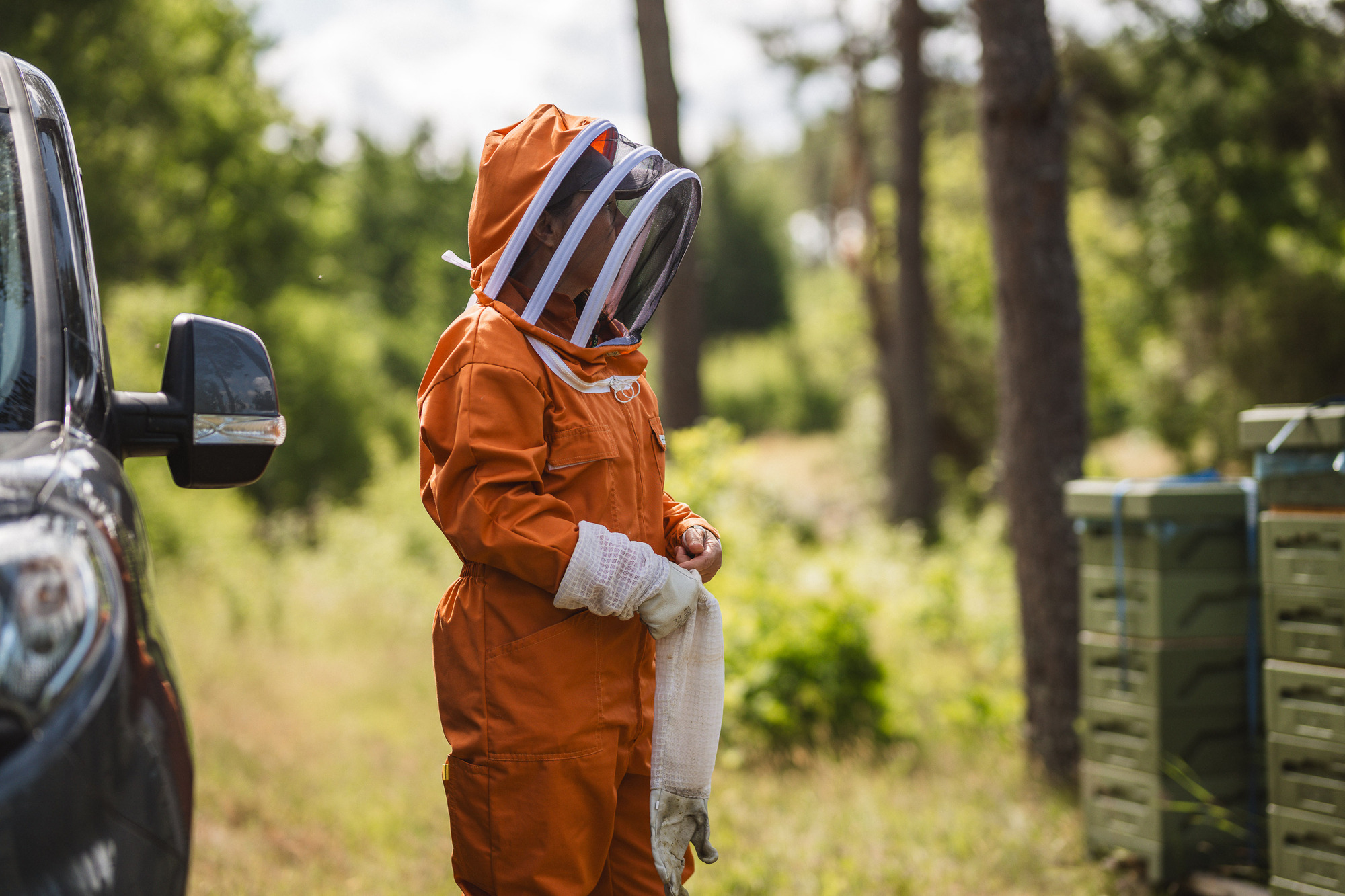
It’s a small business, with me doing most of the work. My family helps with some outdoor tasks, but I manage everything else. I’ve been a beekeeper since 2014, starting as a hobby before turning it into a business in 2016. My background is in engineering, having worked in an electrical engineering company, but I’ve always preferred being outdoors in nature.
Let’s shift to the GUARDIANS project. You are one of the farms involved in Pilot #3 where technology #5 Swarmsense – a beehive protection and monitoring system for small-scale beekeeping – will be tested. What kind of challenges are you facing on your farm, and what do you hope to achieve with GUARDIANS?
In my opinion, the biggest problem now for beekeepers is fake honey coming into Europe. We can’t compete with it. I belong to a professional association, and we analyse honey samples to see how much fake honey is sold in stores. To detect fake honey, we send samples to an Estonian laboratory that can check the DNA. A similar investigation has recently been conducted in Germany and it turned out that 80% of the honey coming into Europe is fake. This makes things very hard for beekeepers to compete in the market.
I am lucky; I am a small business, I have my customers, and I can sell most of my honey at a fair price per kilo. But for bigger beekeepers, who produce more honey, it’s hard to compete and sell all their honey.
The other big problem here in Sweden is climate. Last winter we had continuous ups and downs in temperature, which is nasty for the bees. A stable low temperature is actually better. When we are facing ups and downs, moisture is generated in the hives, and this affects bees’ health.
Also, when it’s warm in autumn, they eat more of their food and may starve at the end of the winter. So, we always need to check they don’t eat too much and have food gradually.
We need to learn about this new climate and the nasty species that come with warmer temperatures. For example, we will need to face a species of big wasp that is coming more and more to the north – it’s in Germany now – eliminating beehives. There are a lot of new things that we need to be aware of.
How do you feel about the use of technology for your daily work? Do you trust the technology you will test in the pilot? And what impact do you think it will have on your daily work?
At the moment, I don’t use any technology, but I am open to it. I think it is helpful.
The technology we will test with GUARDIANS consists of inside and outside beehive sensors to measure temperature, humidity and sound, which are all crucial parameters.
Sound is particularly important to measure because you can gather a lot of information about beehive health from different sound frequencies. For example, the sound bees make changes when they are ill, under attack by predators like wasps, or running low on food. By listening to these sounds, you can identify potential issues and address them early – this is an extremely helpful way to ensure the health of the hive.
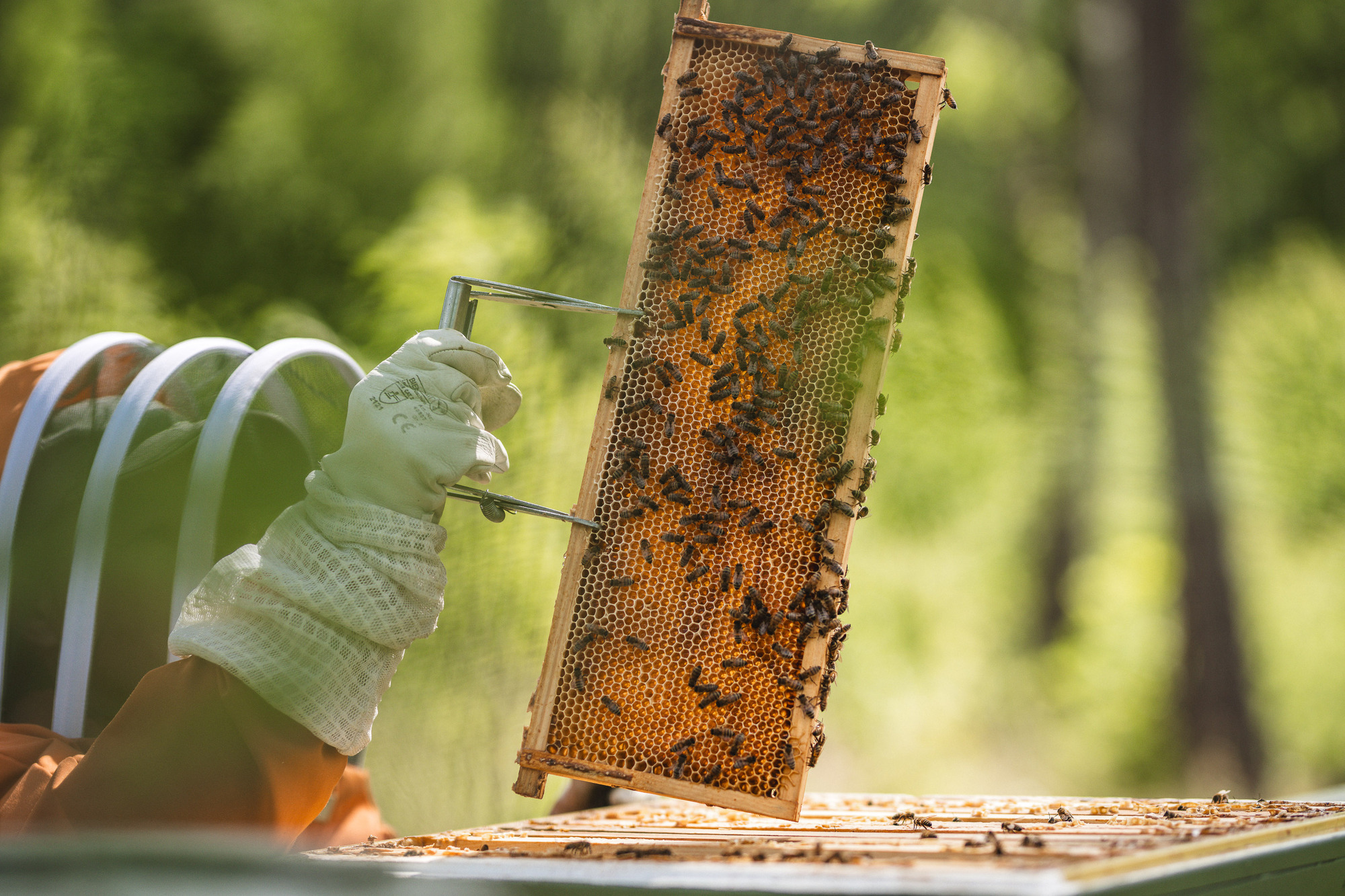
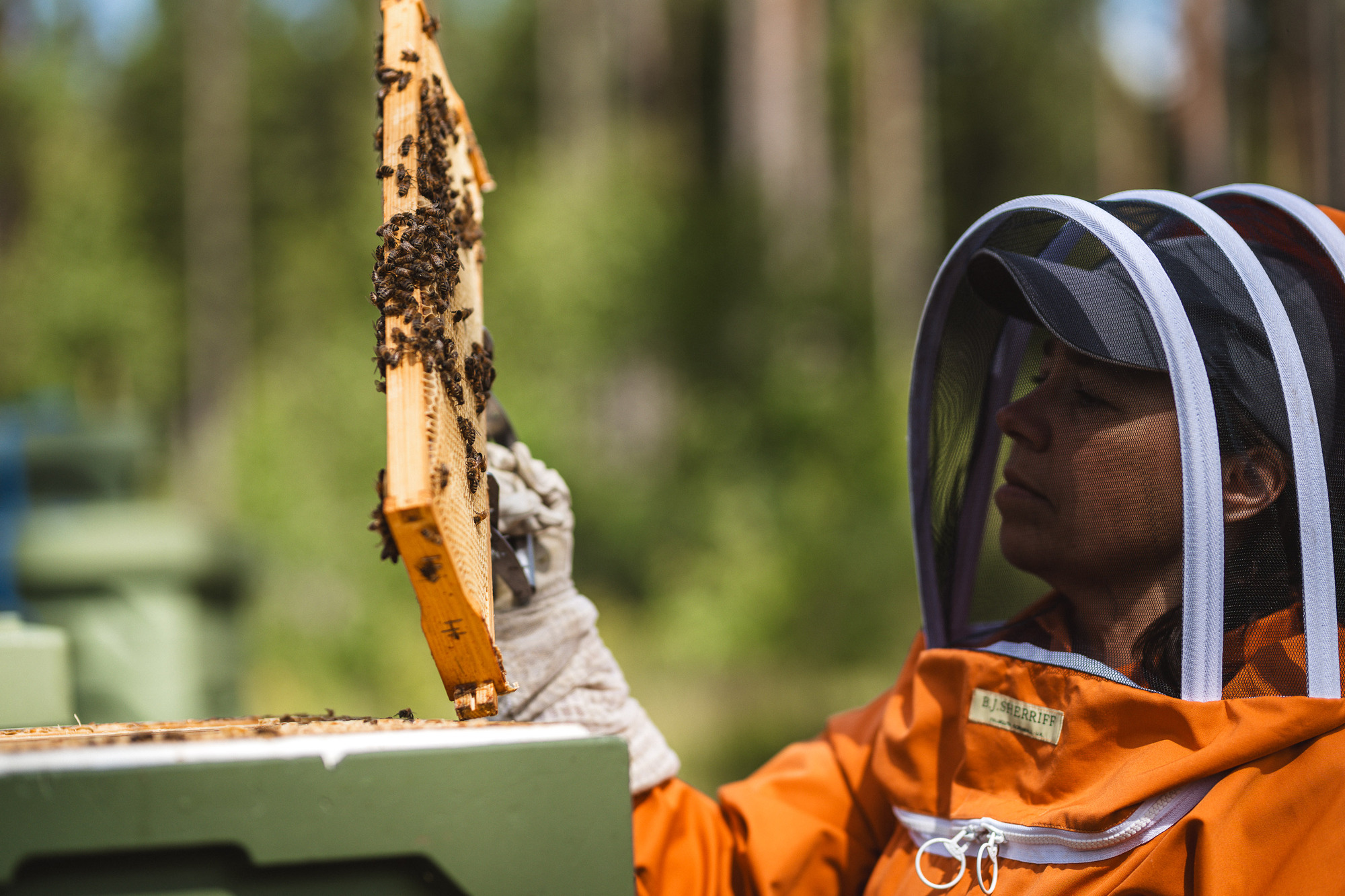
To give you an idea, I manually check the beehives’ health and overall progress every 10 days during the summer. From May to September, honey production is at its peak, and I take honey from the hives four times in a season. Then the bees go back to the beehives for autumn and winter.
In winter, we need to check if they have food enough and the level of snow in the hives. If too much snow falls, we need to avoid bees getting overwhelmed by snow.
Everything is checked manually now.
Temperature is another crucial parameter. When the queen is laying eggs, the temperature in the hives increases and it is extremely important to be aware of this because the food consumption increases too. So, it helps prevent bees from starving.
And, lastly, humidity is also harmful to the bees. When humidity increases in the hives, the bees are trapped inside. The hive then gets dirty and that’s very bad for their health.
We have a long winter here, and I am concerned for the health of the bees in the first place.
For small- and medium-sized farms to be competitive in the global market, it is crucial to bridge the current technological gap with bigger farms. What are the current barriers in your opinion? What do you think is necessary to improve for more farmers to approach innovative and sustainable farming practices?
The cost and complexity of new technologies can be significant challenges for beekeepers, particularly when it comes to teaching others how to use them effectively.
Also, many technologies require electricity to function, which adds another layer of difficulty.
While there are numerous local projects in Sweden aimed at supporting beekeepers, the results often don’t reach the end users. What is needed are more effective projects, like GUARDIANS, that consider the needs of the beekeepers themselves.
Additionally, technology providers need to take a more hands-on approach, offering detailed guidance and training to ensure beekeepers can fully understand and utilise the tools. The information on available technologies is also often difficult to access. Since beekeepers tend to work individually and on a small scale. It’s harder to build networks and stay informed about innovative solutions that could improve practices.
And, on the other hand, what would you suggest farmers do to approach, understand and potentially evaluate the use of new technologies in the agri-food sector?
Farmers need to see that new technologies are simple to use and easy to obtain.
Hands-on demonstrations and shared knowledge can make a big difference in encouraging adoption because they can see other farmers’ experiences and benefit from them.
Also, it must be said that younger people may be more open to integrating new technologies into farming, and their interest can help drive wider adoption and use in the long term. Their willingness to explore and embrace innovation could play a key role in shaping the future of farming practices.
Thank you for this inspiring chat, Maria!
Stay tuned for the next Farm Stories interview.
All photos in this page by ©crelle_fotograf